If you are watching Greenland (2020) and wondering whether a comet disaster like the one in the movie could really happen, the short answer is yes—but not exactly in the way the film presents it. A large comet or asteroid striking Earth is a real planetary hazard. The movie’s basic warning is scientifically sound: an object from space can cause worldwide destruction, and humanity would have limited options once a major impact became unavoidable.
Where Greenland takes dramatic liberties is in the timing, the warning process, the behavior of the comet fragments, and the way a small group of people tries to reach safety. The film uses real scientific fears as the foundation for a family-centered disaster thriller, then compresses and intensifies them for the screen.
What happens in Greenland?
Spoiler warning: The discussion below describes the movie’s central disaster setup and several important story developments.
Directed by Ric Roman Waugh and written by Chris Sparling, Greenland follows John Garrity, his estranged wife Allison, and their young son Nathan as Earth faces the arrival of a comet known as Clarke. At first, the event is treated as a spectacular celestial occurrence. That changes when fragments begin striking the planet and the family learns that a much larger impact could threaten civilization.
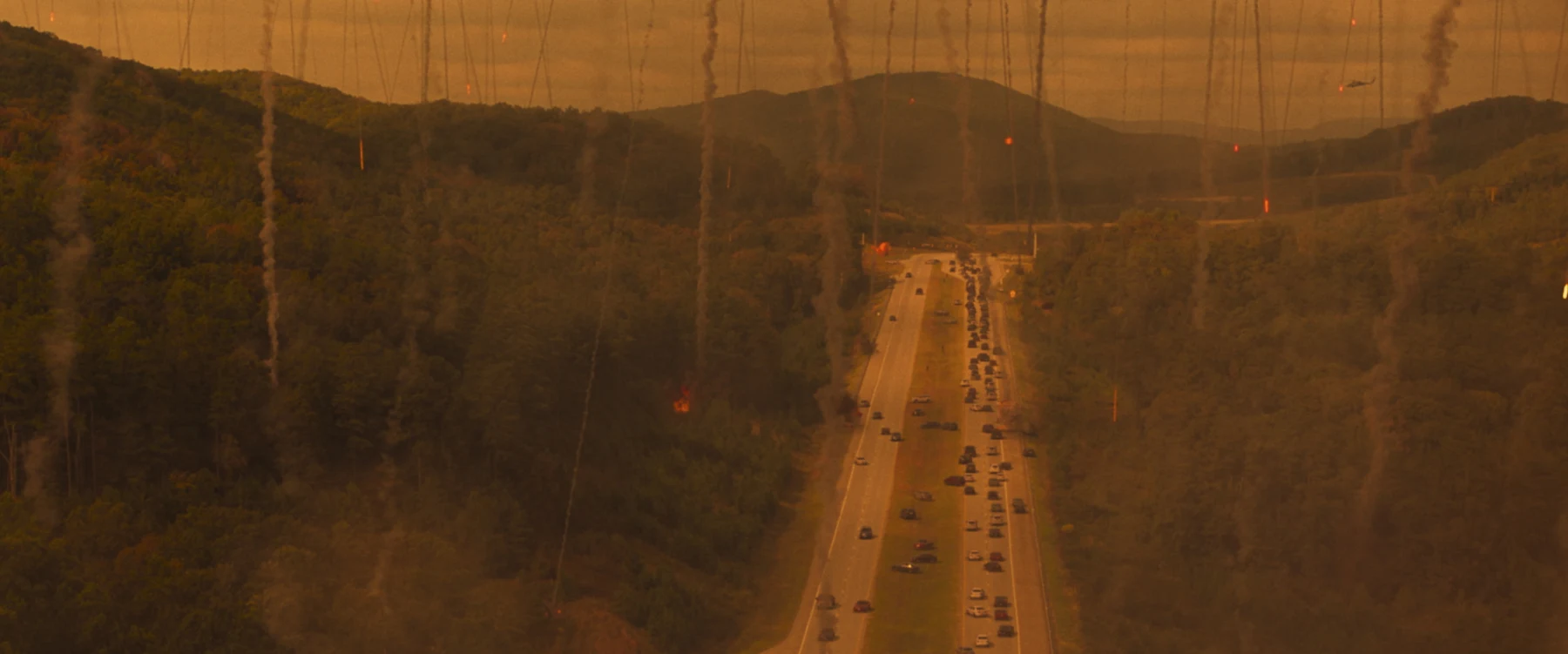
The story then shifts away from a broad scientific investigation and toward one urgent human problem: can the Garrity family reach a designated shelter before the worst impacts occur? That personal focus is one of the movie’s defining choices. Instead of following scientists, government officials, or military planners as the main characters, Greenland stays close to a family trying to survive confusion, separation, traffic, misinformation, and fear.
For more background on the movie’s story and its major turning points, the Plot & Story section offers a useful place to continue.
Could a comet really destroy Earth?
Yes. A sufficiently large comet could cause catastrophic damage if it collided with Earth. Comets are made largely of ice, dust, and rock, but “icy” does not mean harmless. They can travel at extremely high speeds, and impact energy depends heavily on an object’s mass and velocity. Even a smaller space object can release energy on a scale far beyond conventional human weapons when it enters the atmosphere and strikes the ground or ocean.
A large impact could produce several overlapping disasters. The initial blast might destroy a wide area. Atmospheric shock waves could damage regions far from the impact site. Fires, earthquakes, tsunamis, and ejecta thrown into the atmosphere could add to the destruction. If enough dust and debris reached the upper atmosphere, sunlight and global temperatures could also be affected for an extended period.
That does not mean every comet would cause an extinction event. Size, speed, composition, impact location, and angle would all matter. An object hitting an ocean would create a different chain of effects from one striking land. The movie presents an extreme scenario, but the underlying principle—that a major impact could become a global emergency—is firmly grounded in planetary science.
Is the movie’s Clarke comet realistic?
Greenland depicts Clarke as a comet that breaks into multiple pieces, with some fragments producing devastating impacts before the largest body arrives. This is possible in principle. Comets are not always solid, uniform balls of ice. Many are loose mixtures of ice, rock, and dust, and gravitational forces or heat from the Sun can contribute to fragmentation.
However, the exact behavior of a fragmented comet would be difficult to predict. A broken object might produce a spread-out series of impacts, but the spacing, timing, and size of those fragments would depend on the comet’s trajectory and the forces acting on it. The movie uses the fragmentation concept to create a steadily escalating threat. Real celestial mechanics would probably be less tidy and less conveniently structured around dramatic beats.
Another realistic element is the uncertainty. In the film, information changes as officials and the public learn more about Clarke. That reflects a real challenge in tracking space objects: early observations may not provide a perfect prediction of an object’s path, size, or impact probability. Additional observations can significantly refine a forecast.
Could people receive only a few days of warning?
This is one of the movie’s more complicated scientific questions. A comet coming from the outer solar system could be difficult to detect early because it may remain faint for a long time. If its orbit brought it toward the Sun and then toward Earth, astronomers might have less warning than they would for an object that had been observed repeatedly over many years.
Still, the amount of warning would depend on the object’s size, brightness, trajectory, speed, and the capabilities of the observatories watching the sky. A large, bright comet might be detected earlier than a darker or less active object. “Only a few days” is not impossible for every scenario, but it should not be treated as a universal expectation.
The movie also turns discovery into a rapid public crisis. In real life, an impact warning would likely involve layers of observation, probability calculations, international communication, emergency planning, and political decision-making. Those systems could be messy or slow, but the process would not necessarily unfold as a simple sequence of alerts delivered to ordinary families.
Would a shelter in Greenland protect people?
The movie’s shelter concept is plausible as a survival strategy, but its effectiveness would depend on details that the story does not explore at length. A protected facility could help people survive the immediate blast effects and the dangerous conditions that follow. Distance from the largest impact zones would also matter.
Greenland itself is not a magical shield. A location in Greenland could be relatively safer from a particular impact depending on where the object struck, but a sufficiently large global catastrophe would create problems everywhere. Food, water, energy, medical care, communications, and long-term shelter capacity would become serious concerns. A bunker that protects people from shock waves would not automatically solve the aftermath.
The movie is therefore more convincing when it treats the shelter as a last chance than when it suggests that reaching one facility can neatly resolve a worldwide crisis. The science of survival after an impact would be far more complicated than simply arriving behind a secure door.
What does the movie get right about disaster response?
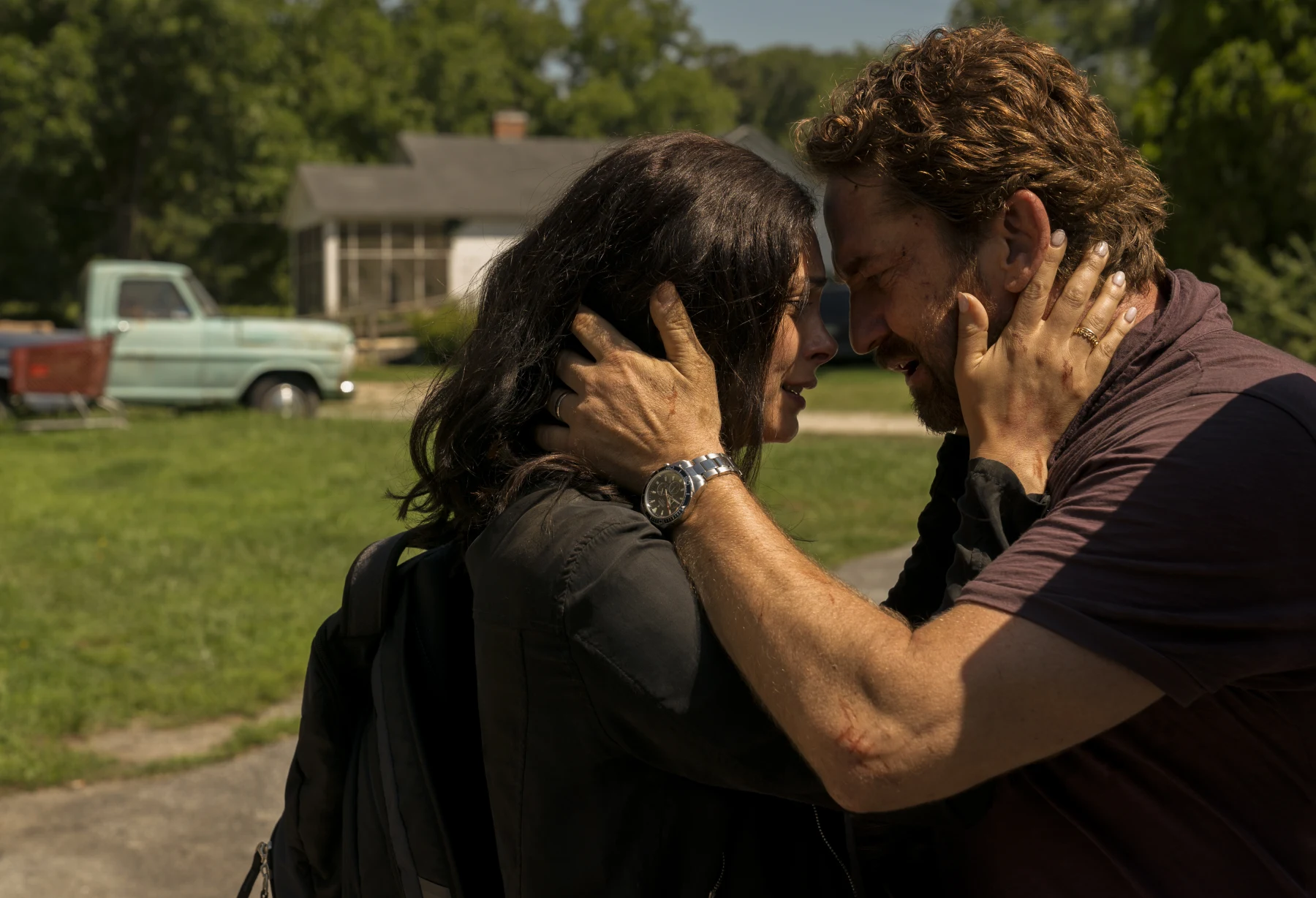
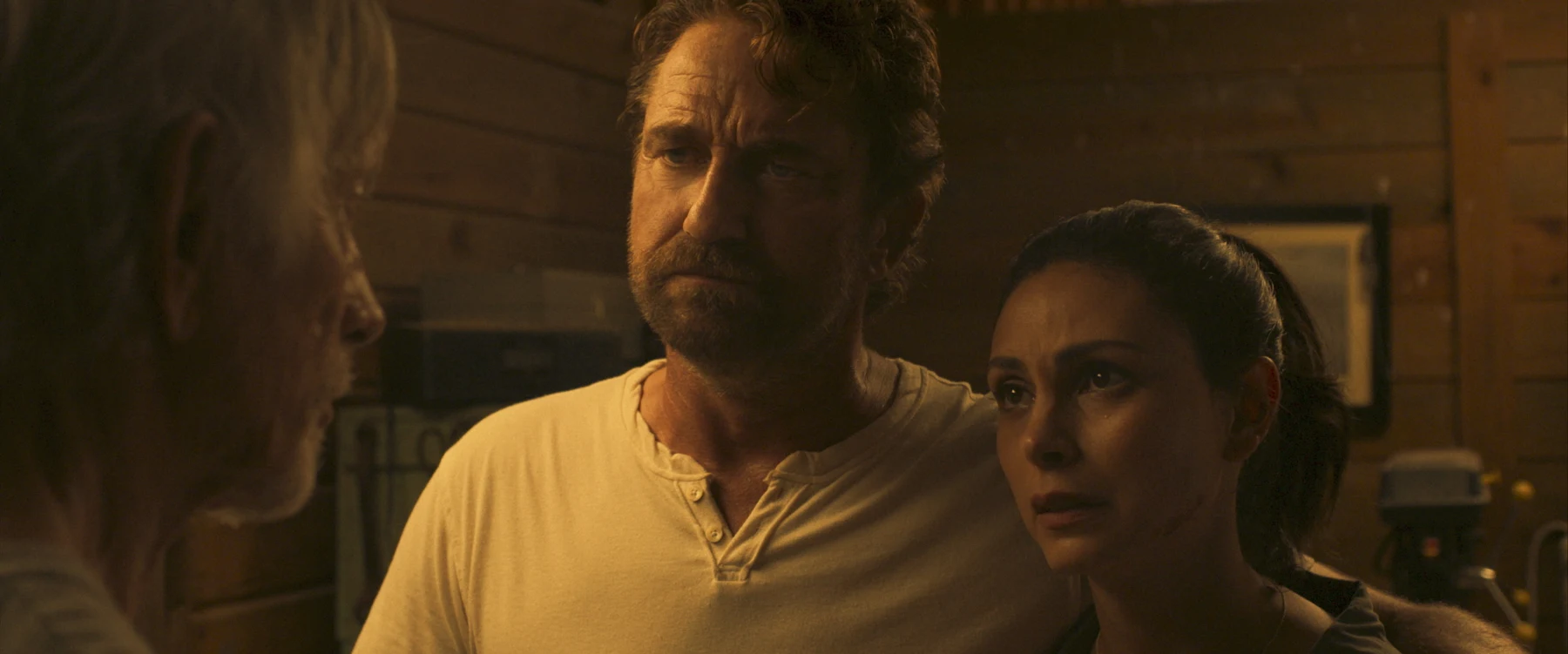
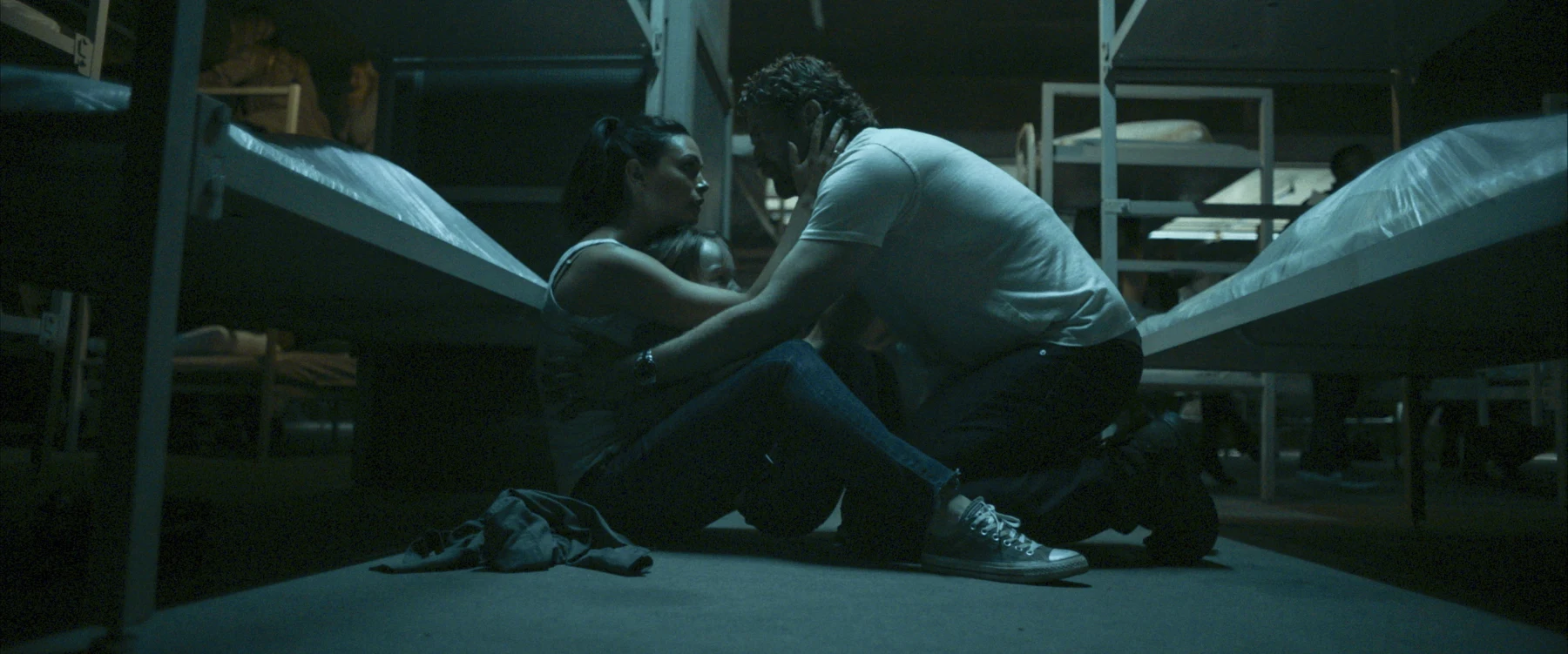
Greenland understands that disaster is not only about the original physical event. It is also about how people react when trusted systems begin to fail. The film shows confusion over official messages, panic on the roads, broken communication, family separation, and competition for limited opportunities. Those pressures are believable even when individual scenes are heightened for suspense.
The family’s journey also highlights a practical truth: surviving a disaster often depends on information, transportation, identification, medical needs, and access to secure shelter—not just courage. A person may know that danger is coming and still be unable to reach safety because of a flat tire, a lost family member, a road closure, or a misunderstanding.
That emphasis gives the film a different texture from a disaster story built mainly around spectacle. The comet is enormous, but the characters experience it through small decisions. Should they trust an emergency message? Should they keep moving or search for someone who is missing? How much risk is acceptable when a child is involved? These are storytelling choices rather than scientific evidence, but they make the disaster feel immediate.
Where does Greenland stretch credibility?
The movie’s biggest scientific weakness is compression. A global impact crisis involving multiple fragments, government shelters, mass evacuation, and long-term survival would involve enormous logistical challenges. Greenland narrows those challenges into a short, highly focused race against time.
The film also expects viewers to accept a difficult balance: the threat is large enough to endanger civilization, yet the story remains centered on a relatively small number of personal encounters. That is effective for suspense, but it means the movie is not a complete simulation of how governments, observatories, emergency agencies, and communities would respond.
Some character decisions and encounters are designed to keep the plot moving rather than demonstrate the most likely behavior in a real emergency. That is normal for a thriller. The important distinction is that the movie’s emotional realism should not be confused with a precise forecast of an actual comet response.
Is Greenland scientifically realistic overall?
It is best described as scientifically plausible at the premise level and dramatically exaggerated at the operational level. The possibility of a dangerous comet, fragmentation, high-speed impacts, atmospheric effects, and global disruption is real. The exact sequence shown in the film is a constructed scenario, not a prediction.
That distinction is useful for viewers. If you judge the movie as a technical disaster simulation, its compressed timeline and simplified shelter plan invite questions. If you judge it as a family survival thriller built around a legitimate planetary hazard, its central idea works much better.
For a deeper look at the physical risks and survival questions raised by the story, visit the Survival & Science section. Readers interested in the movie’s broader ideas can also explore Themes & Analysis on Greenland Movie Reviews.
The real question behind the comet disaster
Greenland is not really asking viewers to calculate the exact probability of Clarke’s arrival. It is asking what ordinary people might do when an abstract planetary threat becomes personal. The science makes the danger credible, but the family story supplies the tension.
So, could the comet disaster in Greenland really happen? A major impact from a comet or asteroid could absolutely threaten life on a global scale. The movie’s specific chain of events, warning period, fragment pattern, and escape route are much less certain. They belong to the realm of dramatic possibility rather than established prediction.
That combination is why the film remains effective as a thought experiment. It takes a rare but genuine hazard and asks viewers to imagine how quickly normal life could become a struggle for information, movement, and family survival. Which part of the movie felt most believable to you—the science of the impacts or the human response?
Join the Greenland Discussion
Share your take, ask a question, or reply directly to another viewer. If your comment contains a major spoiler, make that clear at the start.
What stood out to you most about Greenland?