Spoilers ahead for Greenland (2020). The ending of Greenland is relatively direct on the plot level: John Garrity, Allison Garrity, and their son Nathan survive the comet impact inside the Greenland bunker, then emerge into a world that may finally be safe. The more interesting question is what that survival means.
Does the ending promise a return to normal life? Is it meant to be realistic? And why does the movie spend so much time separating the Garrity family before bringing them back together? The final scenes answer those questions through images and emotional consequences rather than a long explanation.
My reading is that Greenland ends on cautious hope, not easy optimism. Humanity has not defeated nature, reversed the destruction, or restored the old world. The family has simply made it through the worst moment and found evidence that life can begin again. That distinction is central to the film’s meaning.
What happens at the end of Greenland?
After a series of desperate attempts to reach safety, John and Allison finally reunite with Nathan and make it into the Greenland shelter. The family arrives after the largest comet fragments have struck Earth, but the danger is not immediately over. They must remain underground while the atmosphere and surface conditions recover.
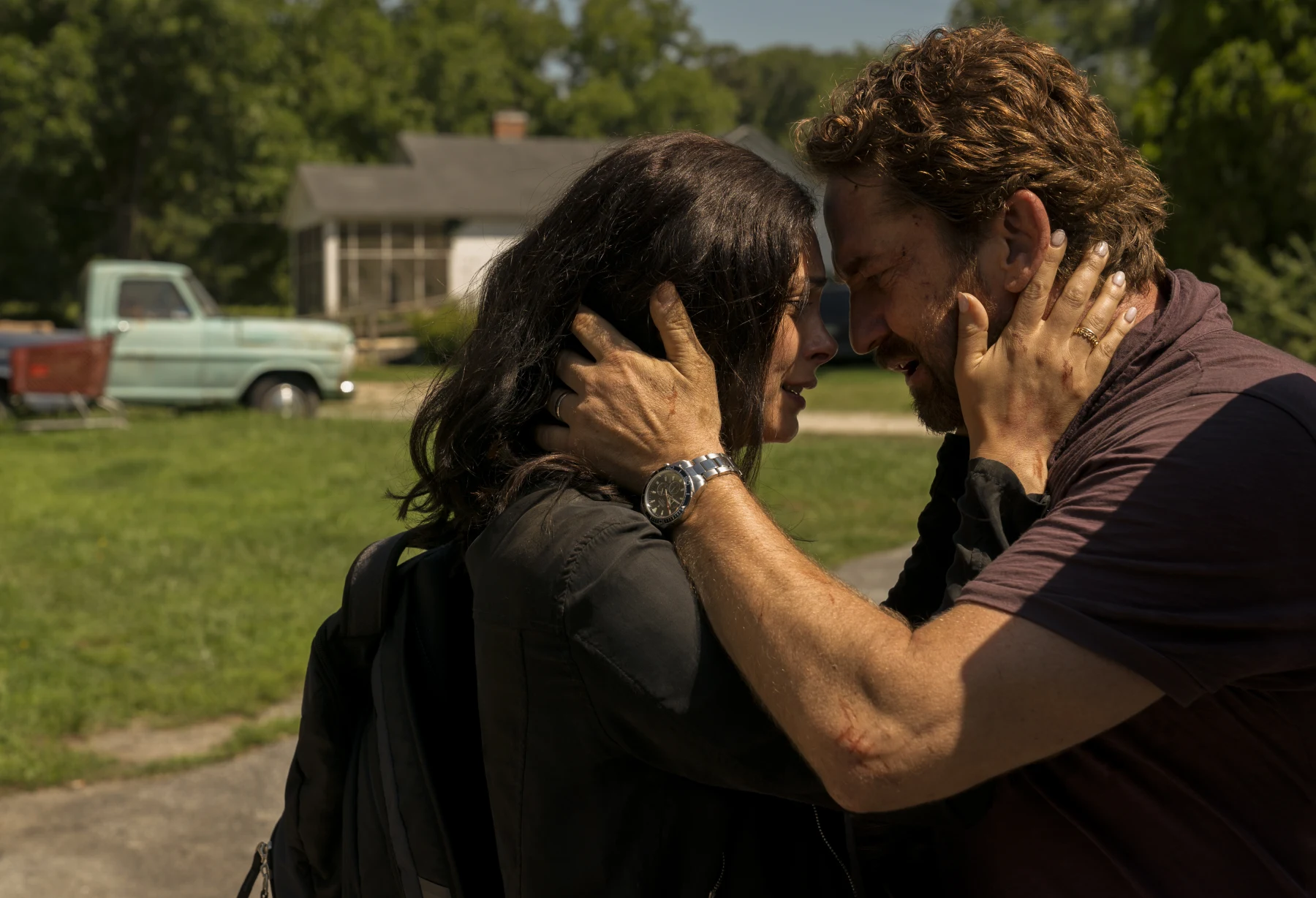
The film then moves forward in time. When the shelter doors open, the survivors discover that the outside world is no longer instantly fatal. The landscape has been damaged, but the sky has cleared enough for people to step outside. Radio contact also indicates that other shelters and survivors have endured around the world.
The ending does not show the Garritys rebuilding a city or solving every problem created by the impact. Instead, it gives them a first glimpse of a possible future. The destruction remains real, but so does the chance to continue.
Why is the family reunion so important?
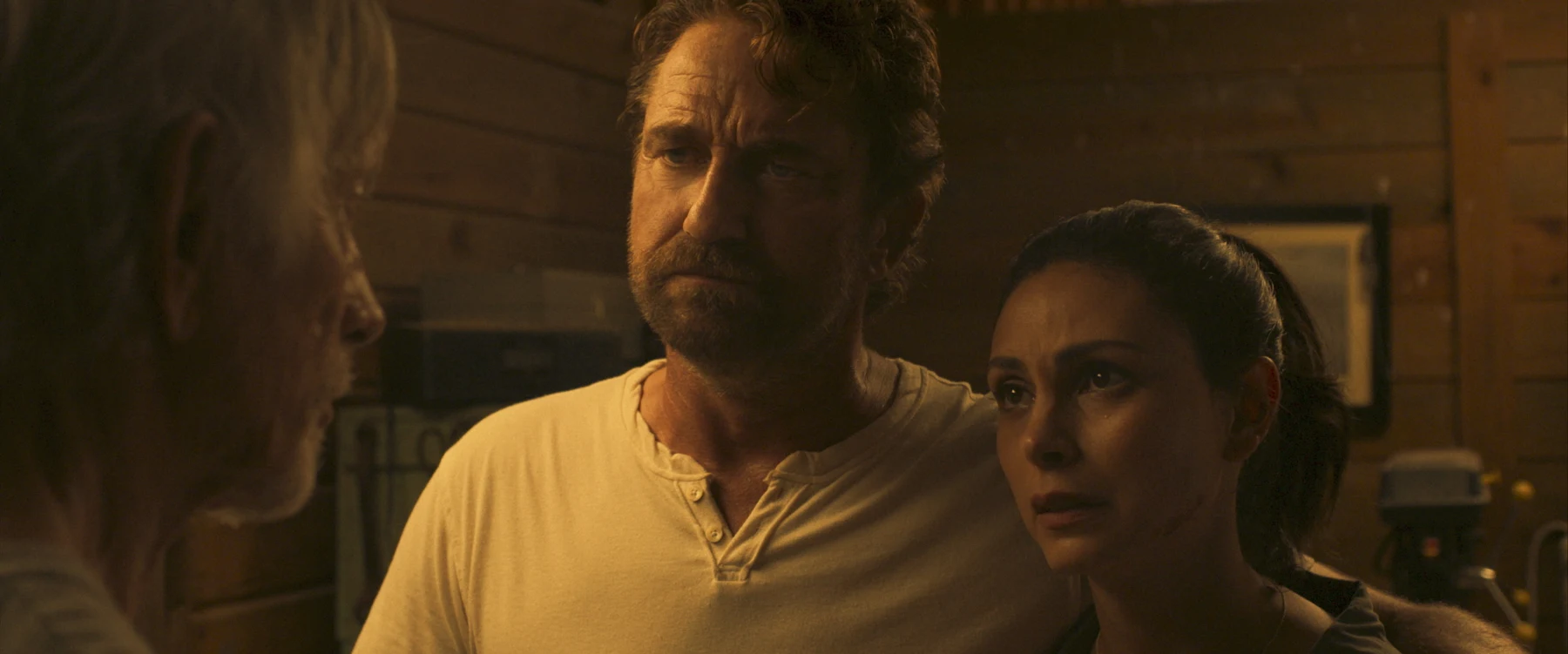
The plot of Greenland begins with a family already under strain. John and Allison are separated, and their relationship is not presented as perfectly stable. The impending disaster exposes those personal problems, but it also gives them a reason to stop treating their ordinary disagreements as the most important thing in their lives.
The family’s separation becomes the emotional engine of the movie. John is forced to pursue Allison and Nathan after they are turned away from an evacuation route. Allison, meanwhile, has to protect their son while navigating a society that is breaking down. Nathan’s medical needs make the journey even more urgent because his insulin is essential to his survival.
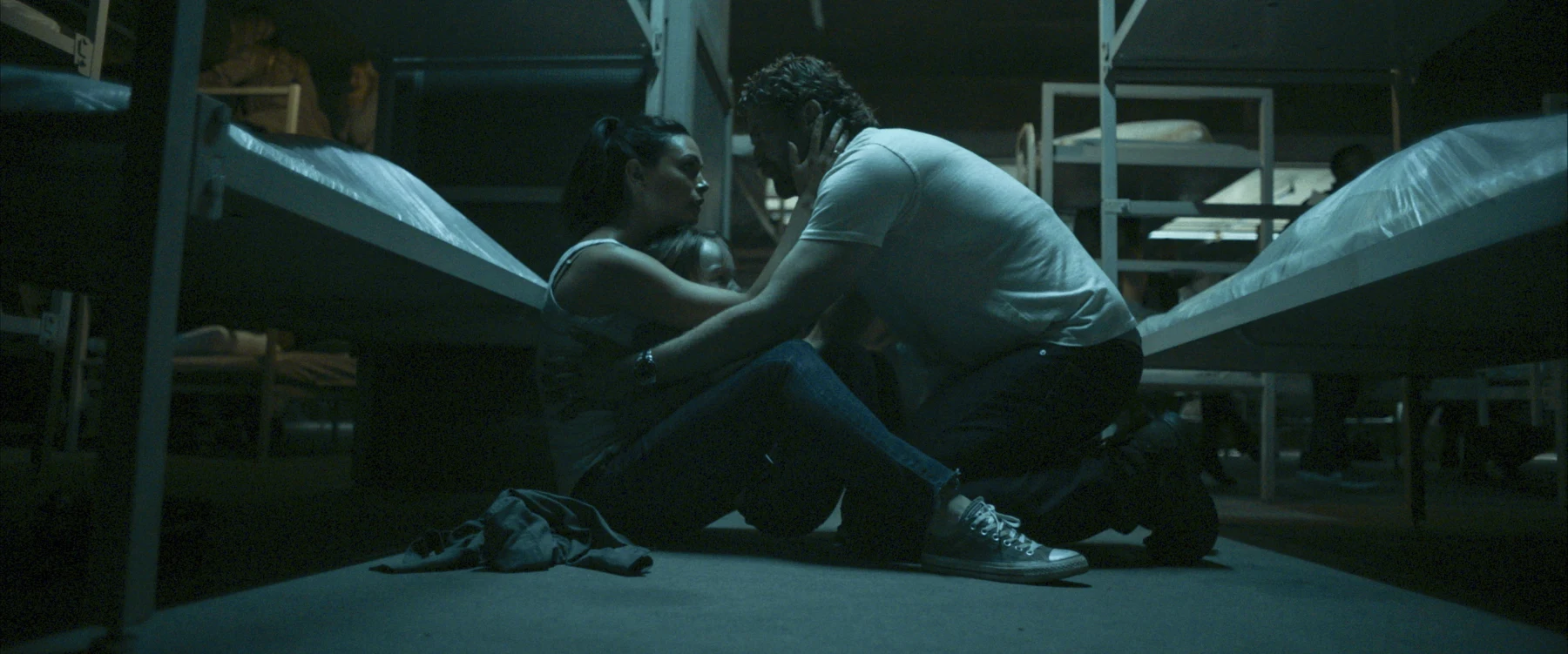
That structure matters when the film reaches Greenland. The bunker is not simply a location where the characters avoid the blast. It represents the goal that has shaped every decision they make. Reaching it together gives the family something that the catastrophe repeatedly threatens to take away: a shared future.
This does not mean the film erases the family’s earlier problems. Survival is not a magical repair for every relationship. But the reunion confirms that John’s effort was not only about securing a place in a shelter. It was also about refusing to accept the family’s separation as inevitable.
Does the ending mean humanity has survived?
The movie strongly suggests that some part of humanity has survived, but it does not claim that civilization is intact. The communications heard near the end point to other people and other protected locations. That detail prevents the finale from becoming a completely isolated survival story.
Still, the scale of the disaster has changed the world permanently. Much of the population is gone, infrastructure has been destroyed, and the survivors cannot simply return to the lives they had before the comet arrived. The bunker offers protection, not a complete solution.
That ambiguity is important. If the film had ended with a restored skyline, functioning institutions, and an uncomplicated celebration, the emotional effect would have been very different. Instead, the survivors emerge into uncertainty. They have a chance, but they also have enormous work ahead of them.
In that sense, the final scene is less a declaration that humanity is safe than a statement that humanity is still present. The distinction gives the ending its measured tone.
What does the cleared sky symbolize?
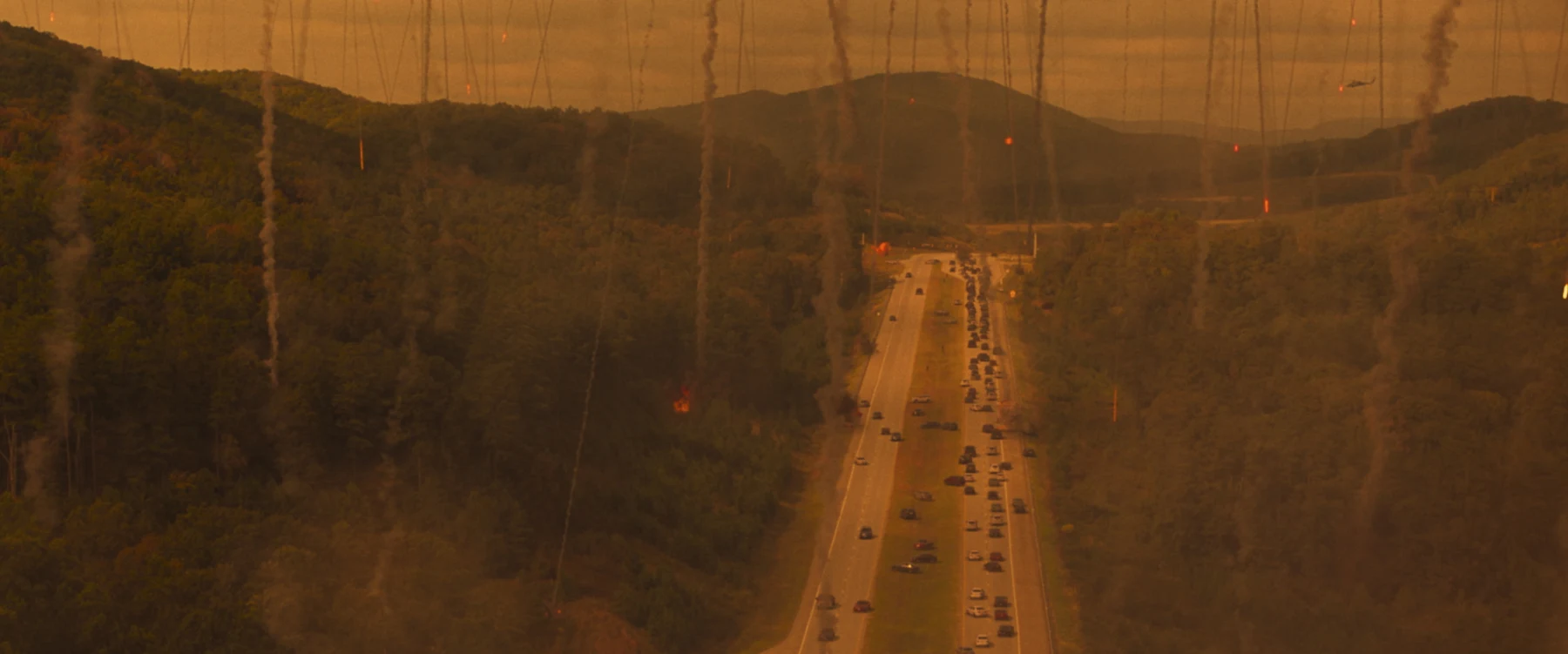
The cleared sky is the movie’s most obvious symbol of renewal. For most of Greenland, the sky represents danger. The comet fragments arrive from above, fire crosses the horizon, and the characters constantly look upward to judge whether another impact is coming.
By the end, looking at the sky no longer produces the same immediate terror. The characters can face it without knowing that destruction is seconds away. That visual change marks the end of the emergency phase of the story.
But the image is not simply a promise that everything will be fine. A clear sky does not restore the dead, repair damaged communities, or guarantee that the survivors will avoid future disasters. It only means that one threat has passed. The characters are free to begin again, not free from all danger.
This is why the ending works better as a symbol of possibility than as a happy ending in the traditional sense. The world is open again, but it is also wounded.
Why does Greenland end with rebuilding instead of another crisis?
The movie could have continued into another action sequence. It could have shown the characters fighting over supplies, facing a new environmental threat, or discovering that the shelter was failing. Instead, it stops at the moment when survival becomes a long-term responsibility.
That choice keeps the story focused on the family rather than turning the disaster into an endless series of obstacles. The central question is not whether John can survive one more chase. It is whether the Garritys can stay together long enough to see a future beyond the catastrophe.
The ending also gives the audience space to imagine what comes next. The survivors will need food, medicine, communication, transportation, and some form of cooperation. None of those challenges disappears when the shelter opens. The movie simply chooses not to turn them into a second plot.
For a disaster thriller, that restraint is meaningful. The final image says that survival is not a finish line. It is the beginning of a different kind of story.
Is the ending realistic?
The ending is emotionally clear, but its scientific and logistical details invite questions. A real comet impact would produce effects that depend on the object’s size, speed, composition, impact locations, atmospheric conditions, and many other variables. The movie compresses complicated science into a thriller framework built around immediate danger and protected shelters.
That does not make the ending meaningless, but it does mean viewers should separate the film’s factual premise from its dramatic interpretation. The movie presents the Greenland shelter as a viable refuge for the selected survivors and uses the passage of time to suggest that the atmosphere becomes survivable. Those are story conditions established by the film, not a complete scientific model of a global impact.
The same applies to the idea that organized communication continues in multiple places. It is plausible within the movie’s world because the story establishes protected facilities and surviving personnel, but the ending does not explain every technical step involved in restoring global contact.
If you want to explore the movie’s disaster mechanics alongside its character drama, the Survival & Science section offers a useful place to continue the discussion.
What does the movie say about ordinary people during a disaster?
Greenland is not mainly interested in heroic institutions. Its most important decisions happen at the level of a family trying to stay together. John is not presented as someone with the power to stop the comet. Allison cannot protect every person she meets. Nathan is not valuable because of a special destiny. Their importance comes from their relationships and their choices.
That focus also explains why the movie includes moments of selfishness, confusion, and betrayal. The disaster does not automatically make people noble. Some characters help others, while others prioritize their own survival. The film’s moral world is messy because the crisis is large enough to overwhelm normal expectations.
The ending responds to that bleakness without pretending it never happened. The Garrity family survives because of persistence, cooperation, and help from other people, not because the world suddenly becomes fair. Their reunion is therefore a small act of resistance against the collapse surrounding them.
Seen this way, the final scenes are not saying that family solves everything. They are saying that human connection gives survival a purpose.
Why the ending feels hopeful even after so much loss
Hope in Greenland comes from scale. The movie spends much of its runtime showing how powerless individuals can be when confronted with a planetary event. The comet cannot be negotiated with, outrun forever, or emotionally persuaded to stop. That makes the family’s eventual survival feel modest rather than triumphant.
There is no suggestion that the Garritys have earned special protection. They survive because they reach one of the limited shelters in time. Their luck is inseparable from the people who do not make it. The movie’s hope therefore carries grief with it.
That balance is what keeps the ending from feeling completely sentimental. The future may be possible, but it will be built on loss. The survivors are not returning to the old world; they are becoming the first people of a new one.
The final meaning of Greenland
The ending of Greenland means that survival is both personal and collective. For John, Allison, and Nathan, it means being together after the disaster has tried repeatedly to separate them. For the wider human community, it means that enough people and systems remain to make rebuilding imaginable.
The clear sky does not promise comfort. It offers a chance. The bunker does not represent a permanent escape from reality. It is a temporary bridge between the destroyed world and whatever comes next. The family’s reunion is not proof that everything has been repaired. It is proof that they have not lost the reason to keep going.
That is why the film ends when it does. The most important victory has already happened: the characters have reached one another and lived long enough to see the danger pass. Everything after that will be difficult, but difficulty is different from hopelessness.
For more discussion of the film’s larger ideas, including family, trust, and survival under pressure, visit Greenland Movie Reviews’ themes and analysis. Do you read the final scene as a genuine new beginning, or as a fragile pause before another struggle? Share your interpretation in the comments.
Join the Greenland Discussion
Share your take, ask a question, or reply directly to another viewer. If your comment contains a major spoiler, make that clear at the start.
What stood out to you most about Greenland?