Spoilers for the ending of Greenland (2020) follow.
The “nine months later” scene in Greenland shows the film’s survivors emerging from an underground shelter after the comet impact. It is not meant to suggest that the disaster was harmless or that the world has returned to normal. Instead, the scene marks the first fragile step from immediate survival toward recovery.
After spending months underground, the survivors finally receive a sign that the atmosphere is safe enough to enter. The shelter opens, and people step outside into a damaged but livable landscape. The moment answers the movie’s most important question: did humanity survive long enough to have a future?
What happens nine months after the impact?
At the end of Greenland, John Garrity, Allison Garrity, and their son Nathan are among the people who have made it to a government bunker in Greenland. The family’s journey has taken them through the collapse of ordinary society, the panic surrounding the approaching comet fragments, and the desperate search for a place inside the shelters.
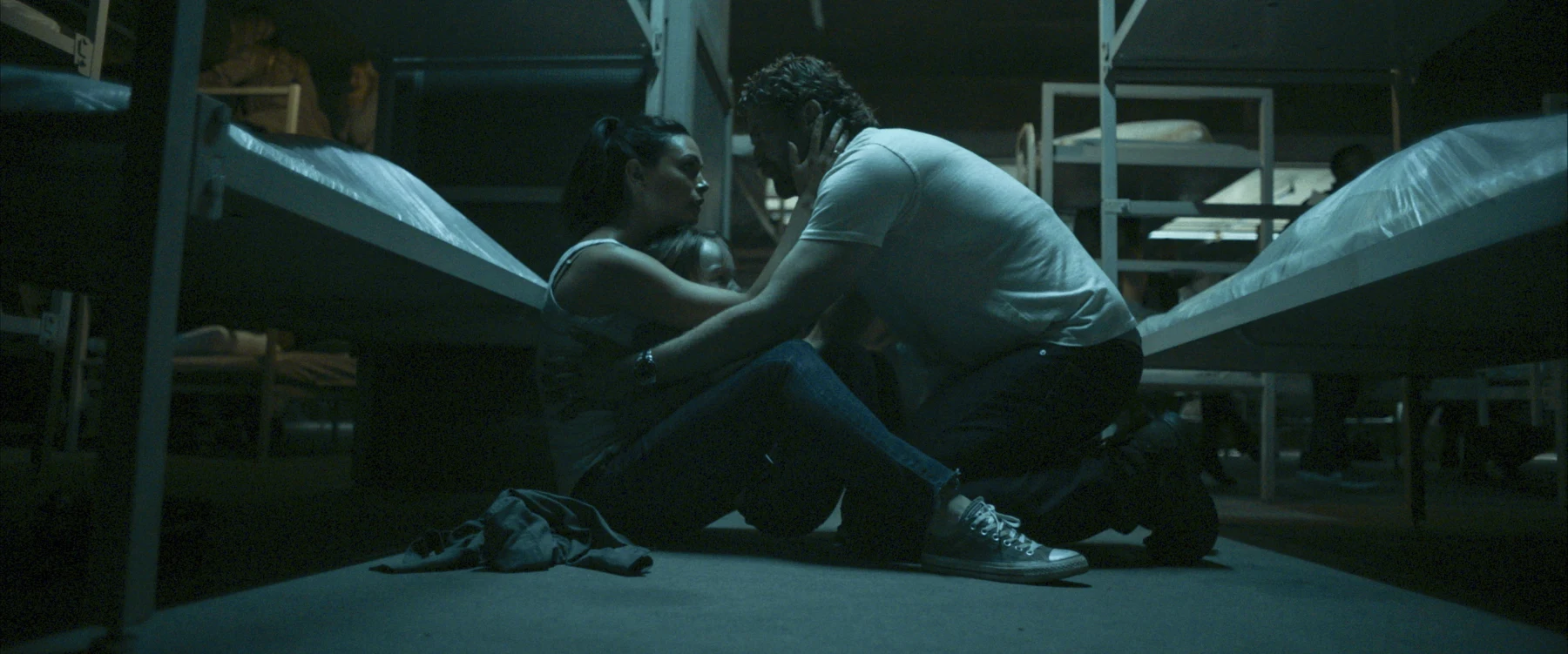
The nine-month time jump moves the story past the most immediate phase of the catastrophe. Rather than showing every stage of life inside the bunker, the film cuts ahead to the point when the survivors can make contact with the outside world. Radio communication indicates that other shelters also remain, and the bunker doors open.
John, Allison, Nathan, and the other survivors step outside. The air is no longer presented as immediately deadly, and the sky has cleared enough for them to see the surrounding landscape. The final images show a world that has been severely damaged, but not completely erased.
That distinction matters. The scene does not say that the destruction was reversed. Cities, infrastructure, communications systems, and much of the population have been lost. The survivors are not returning to their former lives. They are beginning a new one.
Why does the movie jump ahead nine months?
The time jump allows Greenland to end on a note of possibility without pretending that rebuilding would happen quickly. Nine months is long enough for the film’s immediate survival crisis to pass, but short enough to emphasize how early the recovery process remains.
During most of the movie, the characters are focused on urgent decisions: finding transportation, staying together, avoiding dangerous conditions, and reaching the designated shelter. The final scene changes the scale of the story. The question is no longer whether the Garrity family can survive the next few hours. It is whether people can organize themselves after the world they knew has been destroyed.
In that sense, the time jump creates a boundary between two types of survival. The first is physical survival, which drives the thriller. The second is social survival: maintaining contact, protecting communities, and creating the conditions for a future. The film ends just as that second challenge begins.
Is the Earth safe again?
The ending suggests that the immediate atmospheric danger has passed, but it does not establish that the planet is fully safe. The movie gives viewers enough information to understand why the survivors can leave the bunker, not a complete scientific report on the long-term condition of Earth.
The comet impact has caused enormous destruction. The film presents widespread devastation, fires, shock waves, and the collapse of normal systems. Even after nine months, the outside world remains visibly scarred. The survivors therefore have no reason to assume that life will be easy simply because they can breathe the air.
It is also important not to read the final scene as proof that every danger has disappeared. Greenland does not show the full environmental recovery of the planet, and it does not provide a detailed account of what happened in every region. The ending offers a hopeful sign, not a guarantee.
What does the sunlight mean?
The sunlight in the final scene has both a practical and symbolic function. Practically, it confirms that the survivors are no longer trapped in the darkness and danger of the bunker. Symbolically, it contrasts with the fear and confusion that define the rest of the movie.
For much of Greenland, the sky is associated with threat. The comet fragments turn the atmosphere into a source of danger, while the characters watch the horizon for signs of another impact. By the end, the same open sky becomes evidence that the world may be habitable again.
This is an interpretation rather than a stated explanation from the film. The story does not pause to tell the audience that the sunlight represents hope. It uses the visual change to let viewers feel the difference between the disaster period and the uncertain aftermath.
Why are the birds important?
The appearance of birds at the end reinforces the sense that life is returning to the surface. Their presence gives the scene a quiet natural image after a movie dominated by explosions, panic, and human-made shelters.
Birds can also be read as a sign that the outside environment is no longer completely hostile. They are not a scientific measurement of atmospheric safety, but within the film’s visual language, they suggest that the natural world has not been entirely destroyed.
Again, the image should not be treated as proof that the ecosystem has recovered. Nine months would not erase the consequences of a global catastrophe. The birds function more effectively as a small sign of continuity: some form of life remains, and the survivors are not entering a completely lifeless planet.
Does the ending mean humanity will rebuild?
The ending strongly suggests that rebuilding is possible, but it does not promise a simple or successful recovery. The surviving bunker communities have shelter, people, and at least some communication. Those resources give them a starting point.
The radio contact is especially significant. Before the impact, the world’s communication networks become unreliable, and many people are isolated from one another. At the end, the survivors learn that other groups exist. That information changes the disaster from a story about isolated pockets of life into the beginning of a connected recovery effort.
Still, the film leaves the practical questions unanswered. It does not explain how the survivors will restore electricity, produce food at scale, repair transportation systems, or coordinate with distant shelters. Those unanswered questions are part of the ending’s realism. The characters have survived the first crisis, but survival alone does not rebuild civilization.
What does the scene mean for John and Allison?
For John and Allison, the final scene represents more than physical safety. Their relationship is placed under extreme pressure throughout the film, and their family is repeatedly separated by circumstances beyond their control. Reaching the bunker with Nathan gives them a future together, even though that future is far different from the life they had before.
John’s journey is particularly tied to the idea of responsibility. He begins the disaster trying to protect his family while dealing with the consequences of his own mistakes. By the time the family reaches the bunker, the most important achievement is not defeating the comet or controlling events. It is keeping the family alive and together.
Allison’s survival also carries emotional weight because the family’s path is shaped by repeated separation and reunion. The ending does not erase what happened to them, but it gives their relationship room to continue. They can finally look beyond the next emergency.
Nathan’s presence makes the final image even more forward-looking. He represents the generation that will grow up in the aftermath rather than remember the old world as an adult. The movie does not explore that life in detail, but placing the family outside the bunker suggests that Nathan’s future will be defined by rebuilding rather than by escape.
Is the ending happy or bittersweet?
The ending is best described as cautiously hopeful. It is happy in the limited sense that the main family survives, the bunker remains viable, and the outside world appears habitable enough to explore. It is bittersweet because survival comes after immense loss, and the characters have no way to restore the lives they once had.
The movie avoids both extremes. It does not end with total extinction, but it also does not show a miraculous return to normal life. The survivors walk into a damaged landscape with limited certainty about what comes next. That balance fits the film’s larger focus on ordinary people enduring an extraordinary disaster.
Why the final scene matters to Greenland
The nine-month-later scene gives Greenland a different ending from a purely catastrophic thriller. The story is not ultimately about whether the comet can be stopped. The characters have no realistic way to prevent the impact. The emotional resolution comes from their decision to keep moving toward one another and toward the possibility of a future.
The closing image also widens the movie’s perspective. The disaster is global, but the ending remains grounded in a small group of survivors. Their first steps outside cannot repair the planet, yet they demonstrate that the human story continues after the spectacle of destruction.
That is the central meaning of the scene: the world has changed permanently, but it has not ended completely. The bunker provided protection from the impact. The open air represents the harder task that follows—living, cooperating, and rebuilding in what remains.
For more discussion of the movie’s final moments, visit Greenland’s ending explained on Greenland Movie Reviews. What do you think the survivors’ first day above ground would look like?
Join the Greenland Discussion
Share your take, ask a question, or reply directly to another viewer. If your comment contains a major spoiler, make that clear at the start.
What stood out to you most about Greenland?