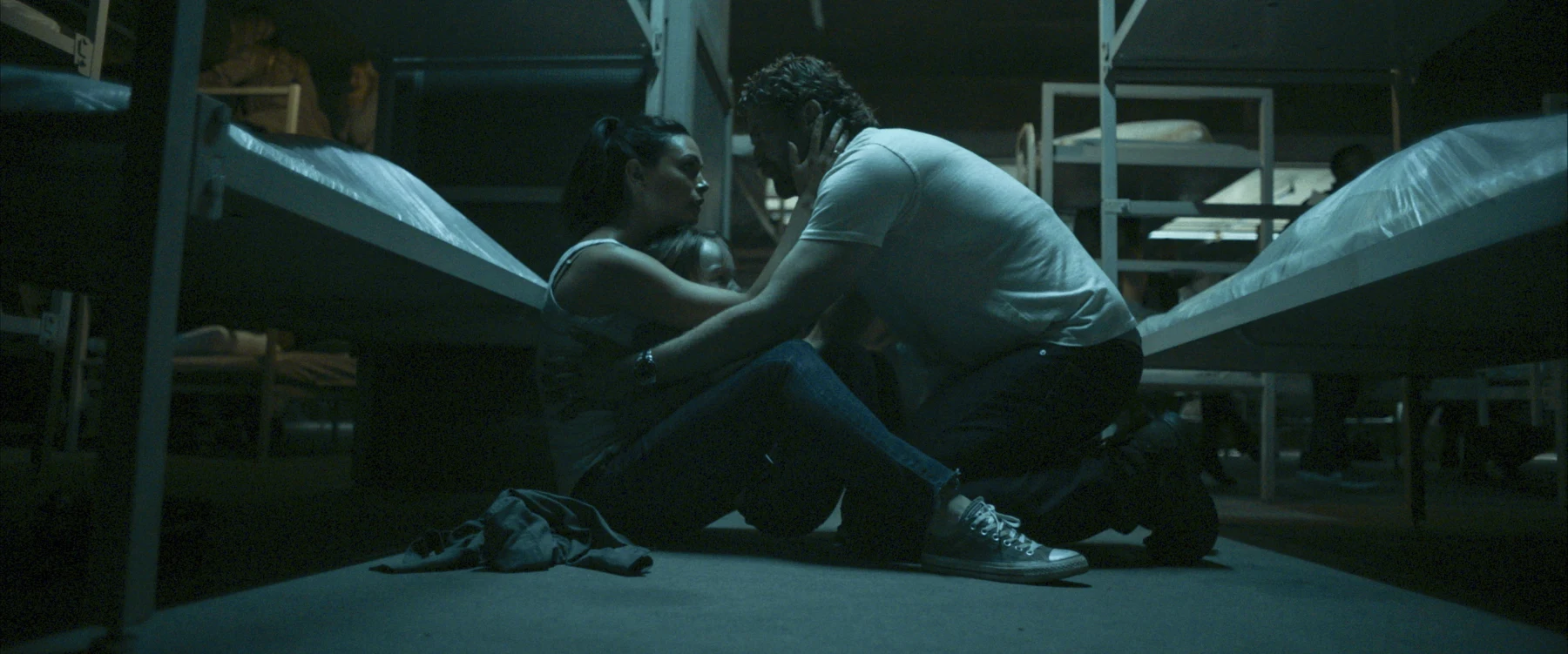
Spoilers for Greenland (2020) follow. The family survives the ending of Greenland, but the movie does not treat survival as a simple victory lap. John Garrity, Allison Garrity, and their son Nathan reach the Greenland bunker after a long series of separations, mistakes, and near-death escapes. They endure the comet’s most destructive impacts underground, then emerge months later to find a damaged but living world.
The final scenes answer the movie’s most immediate question—whether the family makes it—but they also leave room for a more thoughtful interpretation. Greenland’s ending is about physical survival, family reconciliation, and the first uncertain step toward rebuilding civilization.
Does the family survive the end of Greenland?
Yes. John, Allison, and Nathan are alive when the movie ends. They are inside the Greenland shelter during the final wave of destruction, protected from the worst effects of the comet fragments that strike Earth.
The family’s survival is especially important because the film repeatedly separates them. John loses contact with Allison and Nathan after the family is removed from the original evacuation plan. Allison and Nathan are later taken to a different location, while John struggles to find them and reach the designated shelter. By the time the family is reunited, getting inside the bunker is still only the beginning of their ordeal.
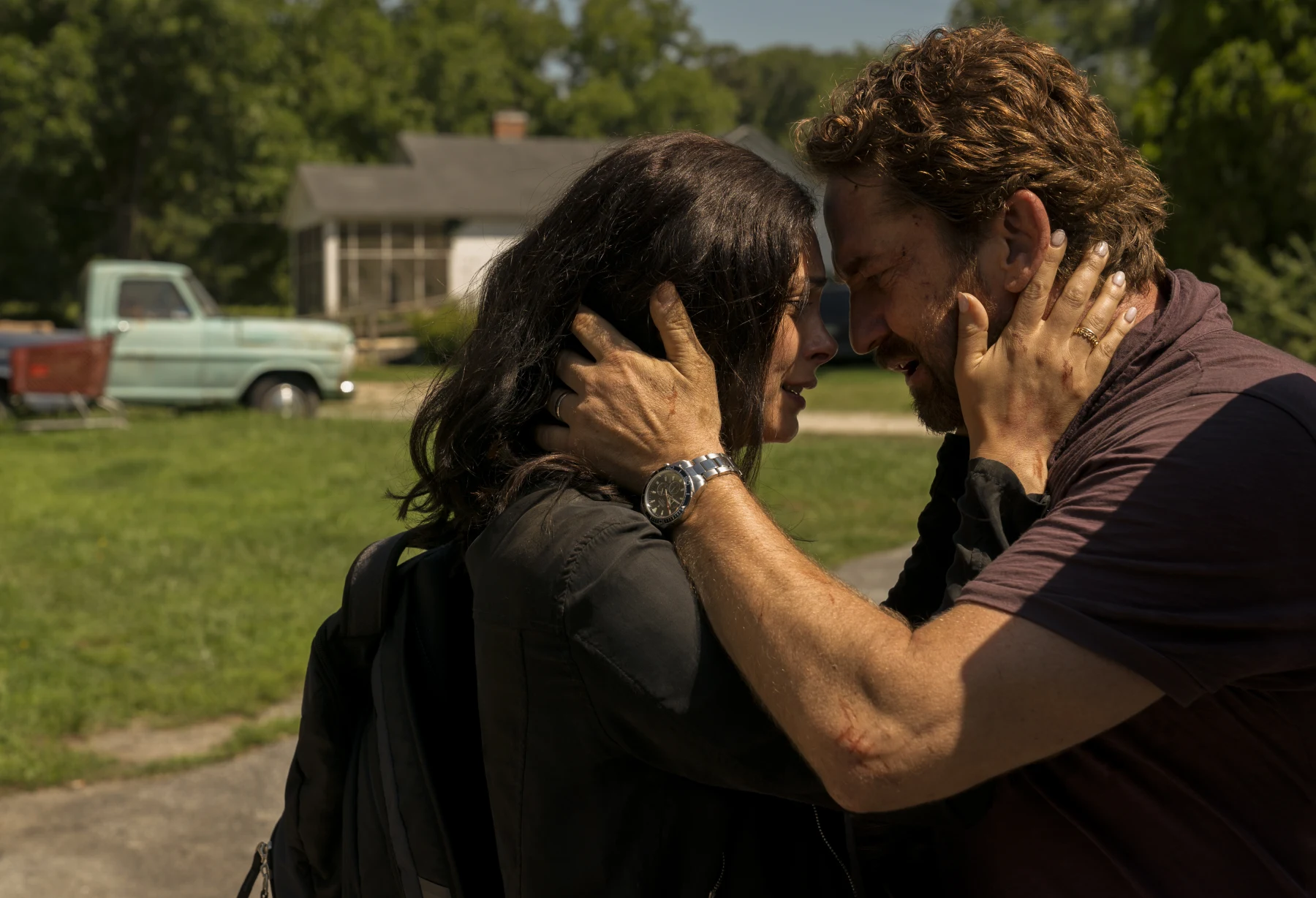
Inside the shelter, the survivors wait through the catastrophe. The film then jumps forward roughly nine months. When the shelter doors finally open, John, Allison, and Nathan walk outside together. Their reunion is not interrupted by another chase or disaster. Instead, the movie allows the family to take in what remains of the planet.
How do John, Allison, and Nathan reach safety?
John’s path to safety depends on persistence more than preparation. He begins the story as a husband and father trying to protect his family, but the evacuation system separates him from Allison and Nathan. Once John realizes that they are no longer with him, his priorities become clear: he has to find them before the comet fragments make the surface unlivable.
Allison and Nathan face their own dangers while trying to reach a safe location. The film does not present the family as protected by special knowledge or unusual resources. They are vulnerable people moving through a breakdown in public order, and their chances depend on timing, luck, and the help—or occasional threat—of strangers.
The family eventually reaches the Greenland bunker after a dangerous final journey. John arrives in time to reconnect with Allison and Nathan, and the three of them enter the shelter before the most devastating impacts. That sequence gives the ending its emotional release: the family is not merely saved individually. They are saved together.
What happens in the Greenland bunker?
The bunker protects the survivors from the immediate destruction on the surface. The movie does not suggest that the facility makes the disaster disappear. Instead, it functions as a temporary refuge where people can wait for the atmosphere, climate, and wider environment to become survivable again.
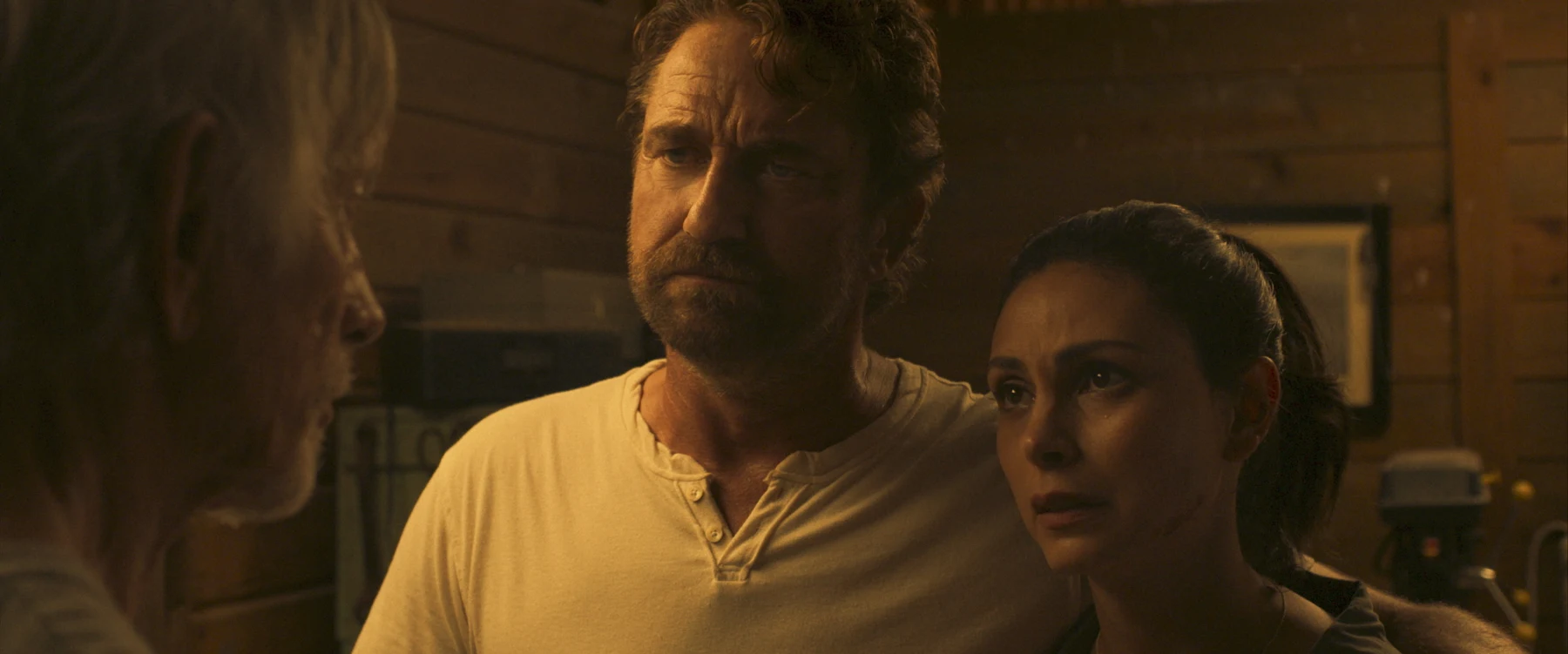
The passage of time matters here. The family spends months underground, cut off from the world they knew. During that period, the bunker represents both safety and uncertainty. Survival means accepting confinement, limited information, and the possibility that there may be very little left outside.
When contact is established with other shelters, the ending suggests that the Greenland facility is not the only place where people survived. Radio communication indicates that other groups are still alive in different parts of the world. That detail keeps the final moments from feeling like an isolated family escape. Humanity has suffered a global catastrophe, but it has not completely vanished.
These events are part of the film’s factual plot. The broader meaning is editorial interpretation: the bunker can be read as a bridge between the old world and whatever comes next. It saves lives, but it does not restore the society that existed before the comet arrived.
What does the family see when they leave the bunker?
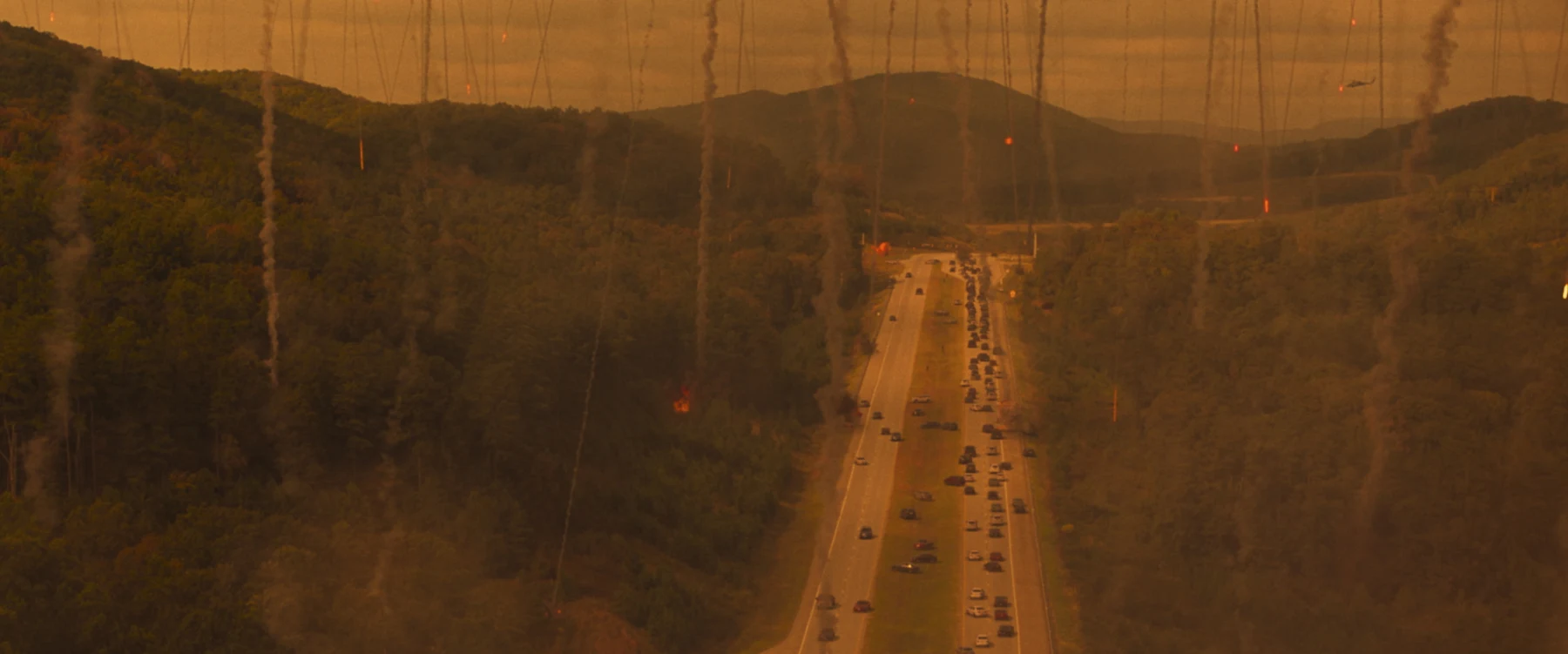
When the doors open, the family sees a landscape transformed by the impacts. The sky and environment are no longer presented as the familiar world from the beginning of the movie. The destruction is unmistakable, but the final image is not entirely hopeless.
The survivors notice signs that Earth may be recovering. The presence of birds and clearer conditions suggests that the planet is beginning to stabilize enough for life to return. Greenland does not claim that everything is normal. The damage is enormous, and the future remains difficult. But the final scenes show that the planet is not permanently dead.
This balance is one of the ending’s most effective choices. A darker version of the story could have ended with the family trapped forever or with an empty, lifeless surface. A more comforting disaster movie might have shown society returning almost immediately. Instead, Greenland stops at an uncertain middle point. The family has lived through the worst, but rebuilding will be a long process.
Why is the ending focused on family rather than the comet?
The comet creates the crisis, but the emotional story is about John, Allison, and Nathan. At the start, John and Allison’s marriage is already strained. Their private problems become harder to ignore once the evacuation breaks the family apart. The disaster exposes the consequences of distance between them, while the journey forces them to make choices based on responsibility and trust.
John’s determination to find Allison and Nathan gives the film its central emotional drive. His actions are not about saving the entire world. He is trying to save the people closest to him. That narrower goal makes the disaster feel personal rather than abstract.
Allison is also more than someone waiting to be rescued. She makes decisions to protect Nathan and keeps moving when the situation around her becomes increasingly dangerous. Her survival is connected to the family’s outcome, but she has her own agency throughout the crisis.
Nathan’s presence reinforces the parents’ sense of responsibility. He is not simply a symbol of innocence; his medical needs create additional practical obstacles during the journey. The family has to think about food, transportation, shelter, and his ability to endure the trip. That pressure makes their eventual arrival at the bunker feel earned within the film’s logic.
Is the ending happy or bittersweet?
It is best described as hopeful but bittersweet. The family is together, and they survive, which gives the ending a clear emotional payoff. However, their victory comes after the destruction of much of the world. They cannot return to their former routine, recover everything they lost, or pretend the disaster did not happen.
The final scenes also avoid promising an easy future. The survivors will need to communicate with other groups, assess the condition of the planet, and build a new way of living. The movie ends before those problems are solved.
That uncertainty gives the ending more weight. The story is not saying that survival fixes every wound. It is saying that survival creates a chance. John, Allison, Nathan, and the other people in the bunker now have an opportunity to begin again, even though they do not know exactly what that beginning will look like.
What the last scene of Greenland means
The last scene suggests that Earth is damaged, but still capable of renewal. The family’s movement from the dark shelter into the open air works as a visual transition from confinement to possibility. They have spent months waiting for the outside world to become survivable; now they can finally see it for themselves.
The returning signs of life are important because they shift the film’s question. For most of Greenland, the question is whether the family can survive the next hour. At the end, the question becomes what they will do with the time that remains. The focus moves from escape to reconstruction.
That does not mean the movie offers a detailed forecast of the future. It does not explain exactly how governments, communities, or economies will recover. Any claim about a specific post-disaster outcome would go beyond what the film shows. What the ending clearly provides is a small but meaningful indication that life can continue.
What the ending says about survival
Greenland presents survival as a collective and emotional act, not just a matter of finding the strongest shelter. The bunker is essential, but so are communication, cooperation, and the family’s refusal to abandon one another. John and Allison do not get through the disaster because they control events. They survive because they keep making difficult choices under pressure.
The final reunion also gives the movie a sense of closure without pretending that the damage is undone. John, Allison, and Nathan have lost safety, certainty, and the life they expected to have. What they still possess is their connection to one another and a chance to help create something new.
For more discussion of the movie’s plot and final moments, browse Greenland ending explained on Greenland Movie Reviews. Do you read the final outdoor scene as a promise of recovery, or as a deliberately uncertain ending? Share your interpretation with us.
Join the Greenland Discussion
Share your take, ask a question, or reply directly to another viewer. If your comment contains a major spoiler, make that clear at the start.
What stood out to you most about Greenland?